


How to Pack for a European Trip (Without Overpacking)
Updated: May 20

Packing for Europe isn't complicated, but there are enough variables that it's worth thinking through before you start throwing things in a bag.
Start with your itinerary
The number of destinations and transfers on your trip should drive every packing decision you make. Moving between four cities in ten days is a very different packing problem than spending a week in one place. The more you're moving, the lighter you want to be.
A carry-on eliminates lost luggage risk, makes transfers easier, and saves you from wrestling a heavy bag up narrow hotel staircases. If you're staying put, a checked bag gives you more flexibility. One approach worth considering: fly carry-on only on the way there, and check a bag on the way home after you've loaded up on olive oil and wine.
Build a color scheme
Choose two or three neutrals that work together and build your outfits around them. Everything becomes mix-and-match, you pack fewer pieces, and you still have options every day. Natural fabrics — cotton, linen, merino wool — travel well, don't wrinkle badly, and hold up to a lot of wear.
Try packing cubes
If you haven't used packing cubes before, they're worth trying. Pack by category or by outfit and you can find anything without unpacking your entire bag. They also compress clothing enough that you'll be surprised how much fits in a carry-on.
The liquids rule
The standard rule applies at most international airports: containers must be 3.4oz (100ml) or less, all fitting in one quart-sized clear bag. Some airports are beginning to update their screening technology, but packing to the standard rule means you're covered everywhere. If you can't live without full-size products, check a bag or plan to buy what you need when you arrive. European pharmacies are well-stocked, and most hotels provide the basics.
Shoes
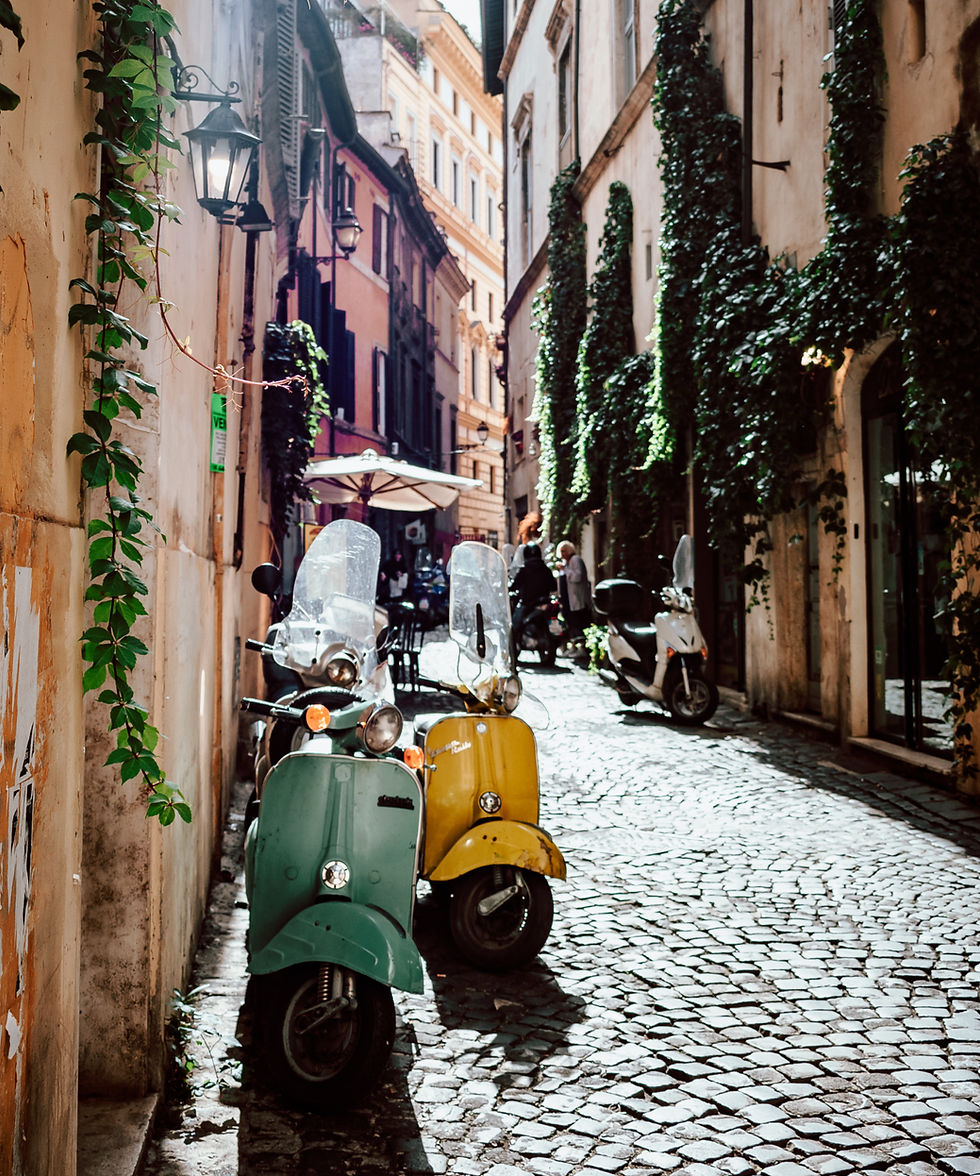
Cobblestones are everywhere in Europe — charming to look at, less charming in the wrong footwear.
Bring shoes that are already broken in, have solid grip, and that you could walk five miles in comfortably.
A pair of low-profile casual shoes for evenings covers everything else. Two pairs is usually enough.
The things people forget
A travel adapter. Europe uses Type C plugs (two round prongs) and US devices won't work without one. Bring two.
A packable rain jacket that actually compresses small enough to live in your day bag.
A small crossbody bag for daily exploring — harder to pickpocket than a backpack.
Blister bandages, because even broken-in shoes have bad days.
If your luggage gets lost
It happens. This is why your carry-on should always have one full change of clothes, all medications, your documents, and anything else you cannot replace. Airlines are required to reimburse reasonable expenses for delayed bags, and most bags turn up within 24-48 hours. It's an inconvenience, not a disaster, if you've packed your carry-on well.
Destination-specific considerations
What you pack for Scotland in October is a different conversation than what you pack for Greece in June. Church dress codes, altitude, rainfall, cobblestones — these things vary enormously by destination and/or season.

And if the idea of packing and unpacking every few days sounds like the least relaxing part of a vacation, there's a solution for that too. A river cruise means you unpack once. Your ship moves overnight, and you wake up somewhere new with your room exactly where you left it. More on that here.
Ready to start planning?
If you're putting together a European trip and want someone who has thought through all of this — and a lot more — I'd love to find a time to chat.


Comments